- Exclusive: This mentalist reveals how you can tell if someone is lying
This story is from November 22, 2017
Exclusive: This mentalist reveals how you can tell if someone is lying
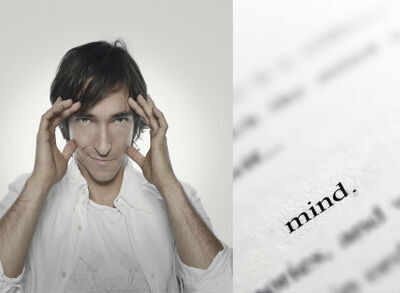
Nicolai Friedrich, the famed German magician and mentalist, reads minds, makes magic and creates illusion like no one else. We got in touch with him to understand how the art of mind-reading works.

- When and why did you choose such an unorthodox profession?
I went to watch a show at a circus when I was four years old. I saw a magician on stage and was really amazed by his act. That changed my life as I decided to become one myself some day.

- The million dollar question - How do you read minds? What are the basics to mind-reading?
Mind reading, as it is often believed, is not about having a supernatural power. It is a combination of psychology and the power of suggestions. It also comprises studying body language.
- How do you know if someone is lying?
Let’s say if you want to talk about lie detection, the first thing you must do is look for a change in behaviour and any deviation from normal. Here are certain things you can deploy:
- Ask repeated questions and see if they change behaviour or the way in which they respond. There could also be a change in the pronunciation of a similar answer. For example, if you want to ask someone to choose from a list of options and he is answering ‘no’ to all of them, notice where the pronunciation of ‘no’ is slightly different.
- Also, if people tell stories more often in the third person and the use of ‘I’ is minimal, chances are they are lying.
- If they don’t discuss emotional aspects of an incident, they may be lying.
- If they delve into irrelevant aspects of an incident and are not specific about the primary part, they may be lying.
However, all these are puzzle-pieces which will help you detect lying only if you put them together.
- How does the power of suggestions work?
It includes two primary things: Body language and eyes.
Body language
A challenge of studying body language is that you must only notice an unconscious reaction of the person, not a conscious reaction. A false body language can easily be adopted if the person knows he is being observed.
Also, body language is subject to misinterpretation because a sign can mean various things. For example, a dog can wag his tail because he is happy but can also do it if it is trying to hit a fly. Similarly, closed arms can mean that a person is disinterested but it could also be because of cold.
The eyes
- If the pupil is very small, the person may be hiding something. However, pupil also changes due to lighting conditions.
- Blinking can also be a sign of lying.
- If the person is trying to recall from his memory and rolls his eyes upwards towards the left, this means that he is saying the truth. However, if he rolls it elsewhere or on the right, chances are he is lying.
- Is it possible to read's one mind without a conversation?
It is very, very difficult to read mind without having a conversation. Body language and suggestions can help but they will only be puzzle-pieces which are incomplete in number.
- Can you go a step ahead of reading minds and also manipulate people's thoughts? How?
Of course, you can. This is called the power of suggestion. It looks like mind reading to the person being read despite that I am making him think what I want him to think. However, they think they are thinking what they want to and not being manipulated in any way. This is achieved by communicating signals to them at a subconscious level, that is, through body language, symbols, gestures, etc.
For example, if I have to ask you to choose a number between 1 and 5 but before this I show you a number (let’s say 2) through my hands or by another subconscious means, the chances that you will choose that particular number (2) become very high. Not a cent per cent chance, but sure the chances get very high.
- Which are the top two traits you have read in people which they are most uncomfortable acknowledging?
Dishonesty and pretentiousness - These two top.
- Is mind reading a science or an art? Can it be learnt by an ordinary person?
It can be learnt by everyone and there is nothing supernatural about being a mentalist. It is based on science but to practice it is an art. The challenge is to make science entertaining and that’s what makes it an art form. However, one must start learning early and should have a lot of experience, practice and meet thousands of people to become a successful mental magician.
- Reading people's minds is very intriguing for sure. But is it also scary because you step into another's intimate territory?
It depends on what people are thinking. If it is only nice thoughts, it should not be embarrassing for either of us. However, it can also be funny at times because people believe that I can get to know their ATM PINs.
- How are magic and mind reading related? Or what is the basis of mental magic?
Both wow the audience. However, magic is more visual and mind reading is more internal. The methods that are deployed in both are different.
- Is magic all about creating illusions?
Yes, of course. However, it is also about inspiring people as it signifies that impossible is also possible because someone just did it right there. It is not only about illusions but to make their thinking more magical and to motivate them to become magicians of their own lives.
- As you have been to India before, is there any peculiarity about Indian audience and its taste wrt magic?
During my last trip, I felt that in India, people can say ‘yes’ or ‘no’ by both nodding and shaking their heads, something that doesn’t happen in other parts of the world. That quite amazed me.
However, Indian people are more willing to suspend their disbelief and believe in magic. They like the sense of wonder because they believe in spirituality. In other parts of the world, it takes me longer to make people suspend their disbelief and enjoy the act.
End of Article
FOLLOW US ON SOCIAL MEDIA